Thinking, language, relationships, emotions, physical skills and independence develop together. We bring quality early years education, English, Montessori principles, sport and wellbeing together in one meaningful day.
Cambridge International School
Why do international standards matter from kindergarten onwards?
Many people associate international accreditation with secondary school. Research suggests that the brain is especially receptive to foreign languages before the age of six. At Viki Kids Club, we therefore combine the Cambridge curriculum with a respectful, playful approach.
Alongside pronunciation, the Cambridge Early Years programme helps children develop:
Critical thinking: The ability to ask “why” and make connections.
Social intelligence: Natural communication in a multicultural setting.
Healthy self-confidence: An important quality for future leaders.
Combining the Czech framework with a global standard
Registering with the Czech Ministry of Education and obtaining Cambridge International School status involves a rigorous process designed to ensure high standards. Families gain a complete education under the Czech framework alongside a coherent, internationally recognised programme.
A vision that goes beyond kindergarten
Brno and South Moravia are becoming a centre for innovation and international business. Viki Kids Club is responding with a long-term plan. Achieving international status is the first step towards an education that can continue across stages and borders.
22 August 20268-minute readEducation
We create an environment where children can feel safe, take an active role, ask questions, try their own solutions and gradually gain confidence in what they can do. We give them room to develop at their own pace.
What we build on
Secure relationships with adults, a stimulating environment, natural communication, plenty of movement and respect for each child’s pace.
01
Educating the whole child
Preschool children discover the world through their bodies, senses, language, emotions and relationships at the same time. Preparing a snack builds fine motor skills, sequencing, vocabulary, cooperation and independence. Building with blocks involves balance, space, quantity, working with a friend and coping when the tower falls.
We make everyday life part of learning. Play, daily routines, creativity, movement, caring for the environment, stories and shared projects all offer opportunities. The teacher knows what an activity helps develop, while the child experiences it as meaningful in its own right.
This approach reflects current thinking in early years education. It supports physical, emotional, social and cognitive development through play, routines and positive interactions.
Children learn most deeply when they can observe, experiment and correct their own solutions.02
Wellbeing makes learning possible
Children can concentrate, explore and form relationships when they feel safe. Challenges still arise. We make sure children have a calm adult beside them to help name, understand and manage what they are feeling.
We rely on a predictable daily rhythm, clear rules and respectful communication. Children have time to rest, settle in and proceed at their own pace. They learn to recognise their needs, ask for help, wait, negotiate and gradually handle frustration. These skills grow through everyday experiences in secure relationships.
A calm child still feels emotions. Over time, they learn to understand those emotions and manage them safely.
03
Montessori principles: a prepared environment and an active child
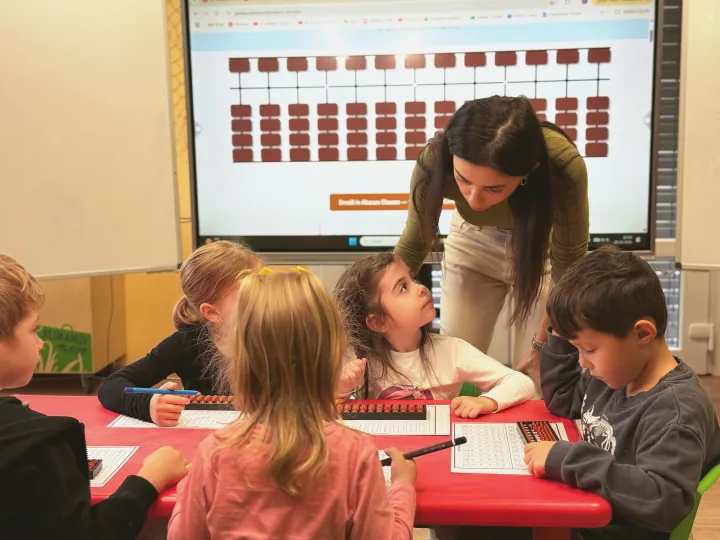
The Montessori approach relies on a thoughtfully prepared environment, clear boundaries, appropriate materials and attentive observation. Materials are accessible, organised and designed to lead children from hands-on experience to understanding.
The teacher first shows the child an activity calmly and precisely. The child then has space to work, repeat it and make corrections. Over time they learn to concentrate, look after materials, coordinate movements, practise everyday skills and take responsibility for finishing. The adult offers enough help for the child to feel secure while leaving room for their own discoveries.
Association Montessori Internationale describes a prepared environment as child-centred and designed to support hands-on exploration, independence, confidence, self-discipline, mutual respect and social connection.
04
English naturally and in context
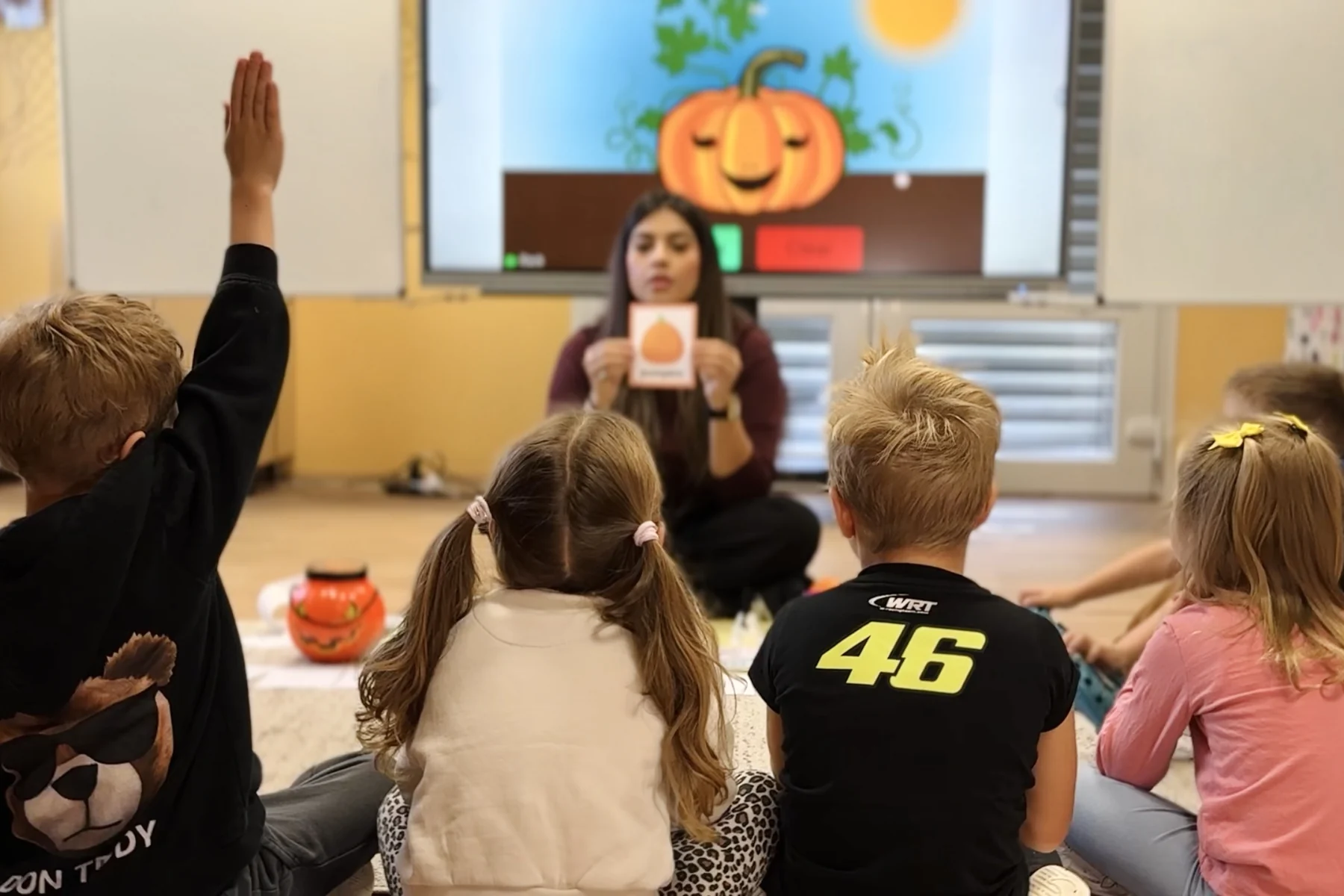
Young children need to hear language in situations they understand. We connect English with play, songs, stories, movement, creative activities and familiar moments throughout the day. Gestures, objects, pictures, routines and what is happening around them help make words meaningful.
Some children start using new words quickly, while others listen for a long time first. Both are welcome. Teachers create a rich language environment children can follow, respond when they try to speak and keep their experience of English associated with security and joy.
05
Movement and sport are part of learning
Movement supports health, fitness, coordination and the development of daily habits. It also gives children a chance to practise persistence, become aware of their bodies, follow rules, cooperate and learn to handle both success and setbacks.
At Centrum Viktoria we can complement everyday movement with sports where children already spend their day. Tennis, general movement training, yoga and other activities are taught with each child’s age and abilities in mind. We focus on varied movement, safe technique, enjoyment and a positive attitude to active living.
The WHO notes that early childhood is a period of rapid physical and cognitive development in which important habits form. We see movement, good sleep and less time spent sitting as connected parts of a healthy day.
The quality of early years education depends above all on everyday relationships and interactions.06
Skilled educators are at the heart of our approach
Even the best methods, materials and sports facilities depend on the people using them. Education at Viki Kids Club rests on a qualified team that understands preschool children’s developmental needs and can put teaching principles into practice with care every day.
Expertise shows in small decisions. Teachers know when to help and when to wait, how to prepare the environment and adapt activities to a child’s age and needs, how to support them in a group and how to talk with parents. They observe progress and choose activities that are achievable while helping children grow.
The OECD identifies positive interactions between staff and children as central to quality early years education. They are associated with early literacy and numeracy and stronger social and behavioural skills. Education, teacher training, teamwork and good working conditions all help make those interactions possible.
Sensitivity
We pay attention to children’s signals, pace, strengths and the moments when they need support.
Expertise
Activities have a clear developmental purpose and suit each child’s age and abilities.
Partnership
We share observations with the team and with parents so the child receives clear, consistent support.
Respect
We guide children clearly and kindly, free from humiliation, labels or unnecessary pressure to perform.
07
How it all comes together in one day
Arrival
A calm welcome, time to settle in, free play and individual work in the prepared environment.
Morning
Themed activities, natural English, Montessori work, creativity, music and time outdoors.
Movement
Age-appropriate sports sessions at Centrum Viktoria complement spontaneous everyday movement.
Rest
Meals, hygiene, quiet time and rest follow each child’s individual needs and rhythm.
Afternoon
Play, clubs, time to build friendships and a calm end to the day, with updates shared with parents.
A steady routine gives teachers room to respond to the group’s energy, the weather, the current topic and individual children’s needs.
08
What we want children to take with them
We want children to leave curious and able to concentrate, communicate, cooperate and care for themselves and their surroundings. We want them to feel able to try something new and know they can ask for help.
English, Montessori, sport and the other activities serve a shared goal: helping children develop in all areas while feeling accepted, capable and emotionally secure.